Room Integrity: The Essential Guide to Protecting Your Gas Fire Suppression System
26th December 2024
AFP’s Third-Party Fire Rating Certifications
26th February 2025

Protecting Against Arc Flash and Arc Blast: Why Pressure Relief Vents Matter
In industrial environments, safety is non-negotiable. Yet, the threat of an arc flash and arc blast remains a persistent danger. These catastrophic electrical events can result in severe damage to equipment, serious injuries, and even fatalities. Beyond the immediate dangers, they pose significant financial and operational risks for facilities worldwide.
In this article, we’ll explain the differences between an arc flash and an arc blast, delve into the causes and dangers of each, and highlight how pressure relief vents can protect your facility from these destructive forces.
What is the difference between arc flash and arc blast?
While arc flash and arc blast are related phenomena, they are not the same. Both originate from electrical faults, but they manifest differently:
- Arc flash. A release of intense heat and light caused by an electrical discharge.
- Arc blast. The physical explosion that accompanies some arc flashes, creating a shockwave that may propel molten materials and debris.
Both events are the result of electrical faults, but their impacts and dangers differ, requiring distinct safety measures.
What is an arc flash?
An arc flash occurs when electrical current flows through the air between two conductors. This can happen due to equipment failure, human error, or contamination like dust or moisture.
Arc flashes generate extreme heat, often reaching temperatures hotter than the sun’s surface, and produce intense light capable of causing severe burns or blindness.
Types of arc flashes:
- Confined arc flash. Occurs within enclosed spaces such as electrical rooms or cabinets. The confined nature amplifies pressure and damage, making it especially hazardous.
- Open arc flash. It happens in open environments, where the effects are less contained but still dangerous.
In this article, we focus on confined arc flashes, as they pose the greatest risk to industrial facilities.
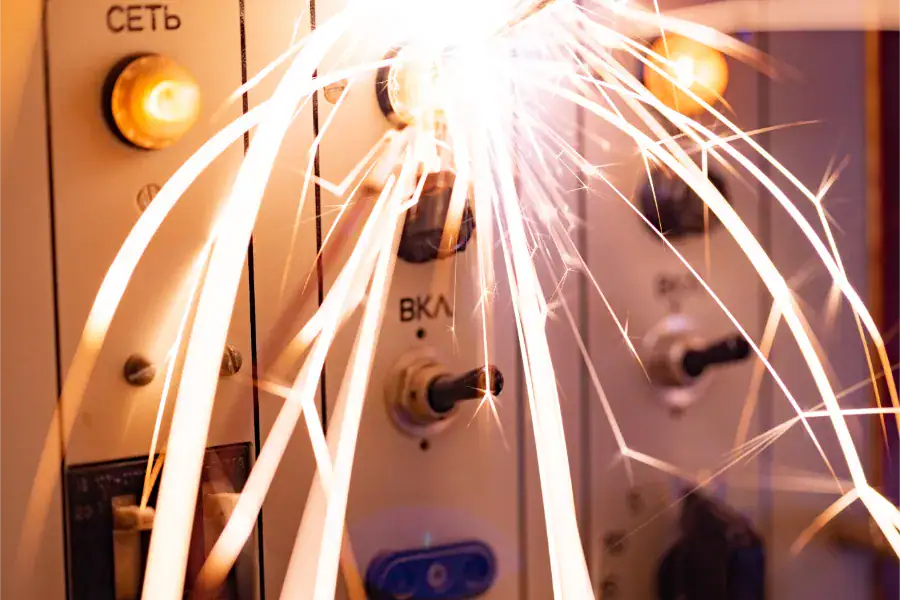
What is an arc blast?
An arc blast is the explosive force, that may accompany an arc flash. The extreme temperatures rapidly expand the air, creating a pressure wave. This wave can propel molten metal, equipment fragments, and other debris at high velocities, posing significant risks to personnel and property.
Arc blasts can destroy equipment, puncture walls, and endanger lives within seconds. The damage often extends beyond the immediate site, impacting nearby areas and disrupting operations for extended periods.
Preventing arc flashes
The best strategy for managing arc flashes is prevention. While it’s impossible to eliminate all risk, several measures can minimize the likelihood and severity of an arc flash:
- Regular equipment inspections. Identify and repair worn or damaged components to reduce the chance of faults.
- Proper PPE usage. Ensure personnel have and use appropriately rated personal protective equipment.
- Arc-resistant switchgear. Install equipment specifically designed to contain and redirect arc flashes.
- Safe work practices. Train employees to follow established safety protocols and procedures.
Limiting the severity of arc flashes and blasts
While prevention is critical, reducing the energy output of an arc flash or blast can significantly limit its destructive potential. Some important things to consider are:
- Adjusting protective device settings. Using current-limiting circuit breakers and relays that trip quickly can reduce the duration and intensity of the fault.
- Zone-selective interlocking (ZSI). This technology ensures only the affected breaker trips, reducing energy in the fault zone.
- Energy-absorbing barriers. These materials can be installed to contain and dissipate the energy of an arc flash.
- Design modifications. Reconfiguring systems to lower fault currents, such as splitting large systems into smaller, isolated units, can help limit energy release.
By implementing these measures, facilities can not only lower the risk of an arc flash but also mitigate the damage if one occurs.
Arc blast protection
When an arc blast occurs, the explosive force generates immense pressure that can severely damage a facility’s structure. Without proper safeguards, this pressure propagates uncontrollably, leading to catastrophic outcomes such as structural collapse, fire, and the destruction of nearby equipment.
Blast vents are a critical solution for combating these risks, providing a controlled release of pressure and directing it safely away from vulnerable areas.
Real-world example: The Astoria Borealis event
The Astoria Borealis event in 2018 is a vivid example of the destructive potential of arc blasts. A fault at a power plant in New York caused an arc blast so massive that it illuminated the night sky with a bright blue glow visible for miles. This explosion disrupted power across the area, damaged critical infrastructure, and required extensive repairs.
Had blast vents been properly installed, much of the pressure and energy from the arc blast could have been directed upward, away from surrounding equipment and structures. By containing the force within a controlled path, the fire and damage, could have been significantly reduced.
This real-world event highlights the importance of implementing comprehensive arc blast protection measures, especially in facilities with interconnected or high-risk equipment. With blast vents, facilities can transform potentially catastrophic arc blasts into manageable incidents, protecting valuable infrastructure and maintaining operational continuity.

How pressure relief vents reduce damage
Blast vents are specifically designed to release the pressure caused by an arc blast in a controlled manner. By strategically placing these vents in areas such as walls or ceilings, facilities can direct the blast’s force away from critical structures. This prevents excessive pressure build-up that could otherwise cause walls to buckle, roofs to collapse, or fires to spread uncontrollably.
For example, consider a power plant with several switchgear unit buildings located in close proximity. In the absence of blast vents, an arc blast in one building could cause structural damage to nearby buildings, igniting fires or disabling vital equipment. The cascading damage could lead to a widespread outage and costly downtime.
By installing blast vents in the ceiling of each building, the pressure from an arc blast can be safely vented upwards, reducing the risk of lateral damage to adjacent structures. This approach not only protects the immediate area but also helps isolate the impact of the event, preventing it from escalating into a larger disaster.
AFP arc blast solutions
At AFP Air Tech, we specialize in advanced blast panels designed to provide effective protection against arc blast pressures. Unlike rupture panels used for deflagrations or gas explosions in industrial or storage facilities, AFP’s solutions are engineered specifically for rapid pressure relief in buildings housing electrical equipment.
Our blast panels, such as the SHX-UN, are dual-purpose systems tested for both explosion and pressure relief scenarios. They are particularly suited for facilities like electrical substations and switchgear rooms, where arc flash events can generate extreme overpressure. Without appropriate venting, these rapid pressure surges can severely damage the structure.
At AFP we have a range of blast panels that are suited best for different environments.
- BSV – Blast Vent. Blast vent for pressure relief and explosion protection for arc flash and electrical and energy-storage installations. Available with thermal insulation or fire rated thermal insulation.
- DWP – Stainless Steel Dynamic Weather Panel. Made from 316L stainless steel, this vent offers superior protection against wind, rain, and smoke, with adjustable opening pressure and a self-closing seal for reliable performance in gas suppression systems.
- HE-BP – High Energy Blast Panel. Engineered to handle high-energy overpressures from electrical faults in GIS units, ensuring robust protection during severe arc blast events.
- HBP-OS – Offshore High Energy Blast Panel. Powder-coated 316L stainless steel with double perimeter seals and ISO flange fixing points, this panel withstands offshore storm winds while maintaining reliable blast relief.
All these blast panels can be paired with our SHX-UN pressure relief vent, which features a four-hour fire resistant rating. This combination ensures not only pressure relief but also effective containment of flames, making it a comprehensive solution for facilities where fire and blast risks are closely intertwined.
With AFP Air Tech’s industry-leading expertise and versatile solutions, you can safeguard your infrastructure against arc blasts while maintaining operational safety and continuity. Contact us to learn how our products can be tailored to meet your specific needs.