
How does pressure relief venting work in a gas fire suppression system?
26th October 2024
Room Integrity: The Essential Guide to Protecting Your Gas Fire Suppression System
26th December 2024

What is the best fire suppression system for electrical rooms?
Electrical rooms house high-value and mission-critical equipment. Think of switchgear rooms, data centres, and telecommunication facilities. In these spaces, a fire suppression system is a crucial safety measure to protect sensitive electrical equipment.
Choosing the right suppression system is essential for preventing costly downtime, protecting vital assets and safeguarding employees. In this article we explain which fire suppression solutions are available, how they work, and we dive into the best fire suppression system for electrical rooms.
What is an electrical room?
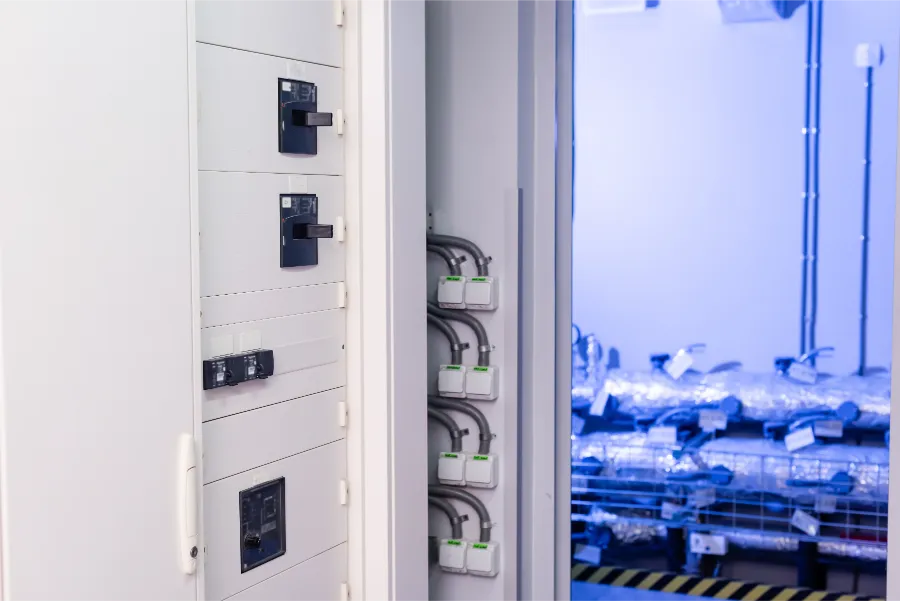
An electrical room is a designated space for equipment that manages, distributes, and stores electrical power or data. These rooms are integral to the operation of any facility, as they support functions ranging from energy distribution to data storage.
Inside, you’ll find components such as circuit breakers, transformers, switchgear, and data servers. Each essential to the infrastructure of power and communication.
Different types of electrical rooms
Electrical rooms vary in function and setup depending on the facility’s needs. Each type of room has specific equipment and requirements for safe and efficient operation.
Here’s an overview of some common types of electrical rooms:
- Server rooms. These rooms house servers and networking equipment. They support data processing and storage for various applications.
- Low Voltage (LV) electrical rooms. LV rooms are where low voltage power, typically under 1000 volts, is managed. Many electrical cabinets house distribution panels that manage the flow of electrical power throughout a building, keeping operations stable and efficient.
- Switchgear rooms. These rooms contain switchgear equipment that directs, controls, and protects electrical circuits. It is vital for safely managing high-power electrical systems.
- Telecommunication rooms. Here, electrical components for telecommunications manages data transmission. These rooms are essential for connecting communication lines, both internally and externally.
Fire risk in electrical rooms
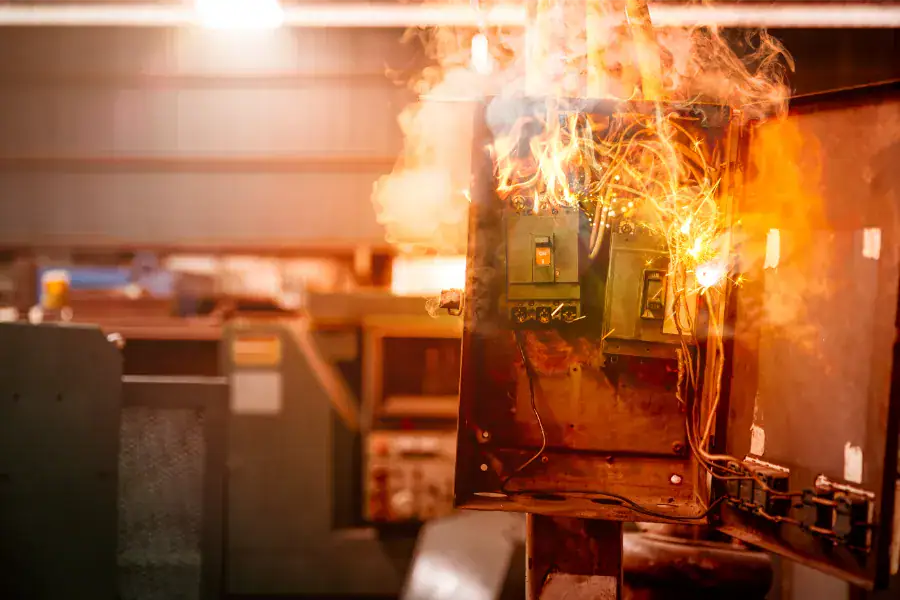
Electrical rooms present unique fire risks due to the presence of high-energy systems and the nature of their equipment. The heat generated by machinery, combined with the chance to cause electrical arcing, makes these areas potential fire hazards.
Fire in these rooms is particularly dangerous due to the conductive nature of water. Water can worsen electrical fires and risk equipment damage and personnel safety.
Causes of fire
Electrical rooms face unique fire hazards due to the high-energy equipment they contain. From overheating to electrical faults, several factors can increase the risk of a fire. Here are some of the most common causes:
- Overloaded circuits. Excessive electrical load can cause overheating and fires.
- Electrical arcs. Arc flashes generate high temperatures and can ignite combustible materials.
- Short circuits. Faulty wiring or equipment failures can lead to short circuits, sparking potential fires.
- Static electricity. Static discharge can ignite flammable materials or substances in the vicinity.
- Poor maintenance. Worn parts or loose connections can lead to overheating and sparking. Regular inspections are necessary.
Methods of fire suppression
Fire suppression systems typically work through one of the following methods:
- Cooling. Reducing temperature to prevent ignition.
- Starving. Removing fuel sources to limit fire spread.
- Smothering. Displacing oxygen to extinguish flames.
- Interrupting. Interrupting the chemical reaction that sustains fire.
While effective in many scenarios, water-based methods are not suitable for electrical fires, as water is a conductor of electricity. If water is applied to an active electrical fire, for example with sprinkler systems, it can conduct the current, creating several major hazards.
Adding water to an electrical fire causes electrocution risk, may worsen the fire and it damages electrical equipment. Therefore, sprinkler protection should be avoided in electrical rooms.
In electrical rooms, non-water-based suppression systems, like gas-based systems, are far safer. These systems smother the fire quickly, without introducing any conductive material.
Best fire suppression system for electrical rooms
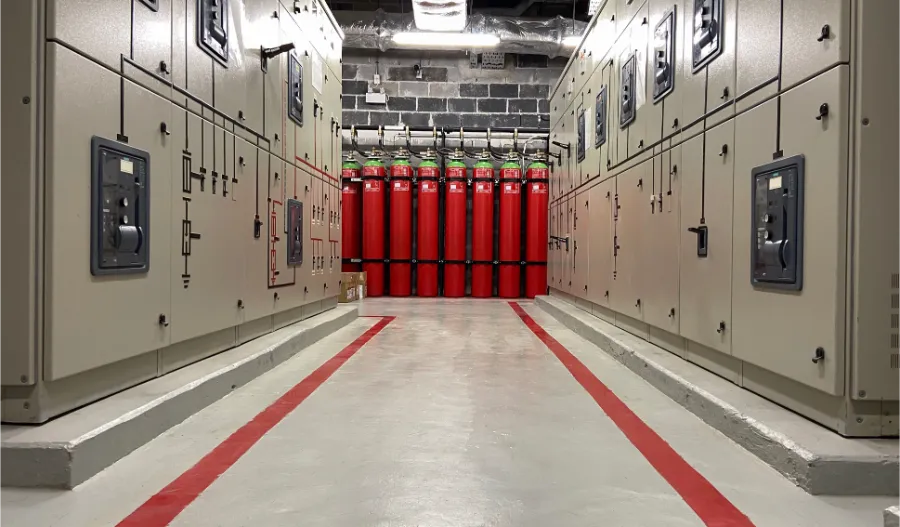
The ideal fire suppression system for electrical rooms is an automatic gas-based system. Gas-based systems are designed to suppress fires without damaging equipment or endangering personnel.
Once a fire is detected, the system fills the room with a gas that interferes with fire at a molecular level. This way the fire is effectively extinguished, without leaving residues or causing damage.
There are several types of gas-based options:
- CO2 (carbon dioxide). Effective in fire suppression, but can be hazardous in occupied spaces due to oxygen displacement.
- Inert gases. These gases, such as argon or nitrogen, are also called clean agents. They lower the oxygen concentration to a level that can’t sustain fire. They are safe for equipment and environmentally friendly, but require careful monitoring in occupied rooms.
- Chemical gases. These gases, such as FM-200 or Novec 1230, are highly effective and safe for sensitive equipment. They use chemical reactions to suppress fire without depleting oxygen significantly. This adds an extra layer of protection for personnel.
When gas-based fire suppression systems activate, they release a substantial volume of gas into the room, quickly increasing internal pressure. If this pressure is not managed, it can strain the room’s structure, potentially leading to wall or ceiling damage. Pressure relief venting is essential to allow excess pressure to safely escape and avoid structural damage.
How pressure venting works
Pressure venting systems are typically installed in walls, ceilings, or doors. These vents open automatically when pressure builds, releasing excess air and protecting the room’s integrity.
To ensure gas stays contained within the room until suppression is complete, room integrity (the airtightness of the space) is crucial. Testing and maintaining room integrity ensures the suppression system operates effectively without leaks or pressure loss.
AFP pressure vents
As the global leader in pressure venting solutions, AFP provides custom-engineered pressure relief vents specifically for gas-based fire suppression systems.
Our vents ensure that, when a gas suppression system is triggered, pressure is safely released. This helps to protect the room’s structure and its contents. Our vents are designed to integrate seamlessly into your suppression system, maximizing safety and minimizing risk.
We offer specialized vents for different gas types:
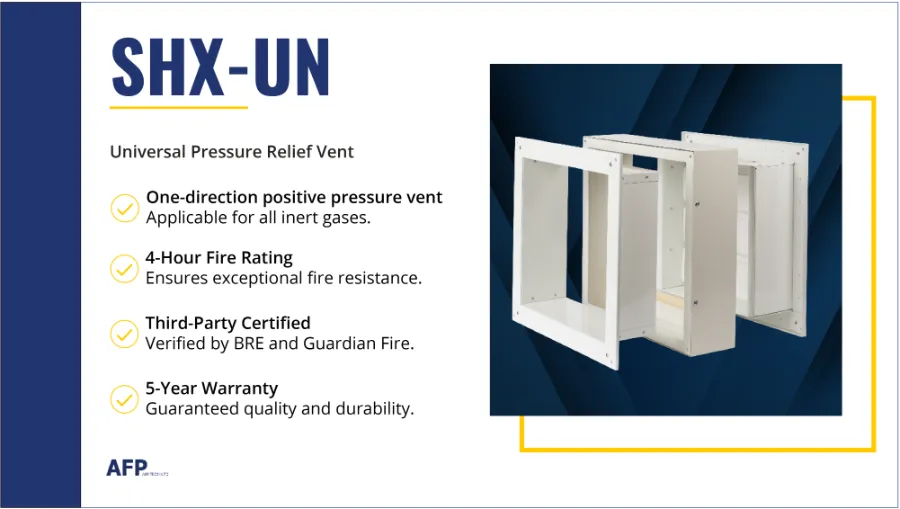
- SHX-UN. This is our universal pressure relief vent, ideal for inert gases or CO2. This pressure vent is designed for high-pressure situations, ensuring room integrity during gas release.
- DUX. Our DUX is a two-way vent, specially designed for chemical gases. This unique pressure vent is certified for high-efficiency performance and quick response during discharge.
Check out the SHX-UN product page or the DUX product page for more information.

What types of businesses require electrical room fire suppression systems?
Businesses with critical electrical infrastructure benefit from reliable fire suppression in their electrical space. Here’s a look at some sectors that commonly require these systems:
- Data centres. Continuous uptime is essential, so fires must be prevented and contained.
- Enterprise facilities. From office buildings to corporate headquarters, electrical infrastructure is crucial.
- Manufacturing plants. Production processes rely on uninterrupted power management.
- Server rooms and IT facilities. Critical for data storage, where fire damage can lead to data loss.
- Telecommunications offices. Infrastructure for communication systems must be protected against downtime.
- Hospitals. Essential power and equipment are critical for patient safety.
Get in touch
With our expertise, AFP offers end-to-end pressure relief venting solutions tailored to meet the unique demands of each facility. Contact us to learn more about how our pressure venting solutions can optimize your fire suppression system, ensuring safety and security in every situation.