
The Importance of Weather Testing for Pressure Relief Vents
26th April 2025
Advanced Battery Storage Fire Protection with Battery Pressure Relief Venting
26th June 2025

What is the best fire suppression system for server rooms and data centres?
Fire safety is a critical concern for any organisation that operates a server room or data centre. These environments house high-value equipment and process enormous volumes of data essential to daily operations. Even a minor fire incident can lead to costly downtime, data loss, reputational damage, and extensive equipment replacement.
Because of the density of electrical equipment and the continuous operation of servers, the risk of overheating, electrical faults, or equipment failure is always present. That’s why fire suppression systems aren’t just a precaution—they’re a fundamental part of any robust risk management strategy. Choosing the right system can mean the difference between a minor disruption and a full-scale disaster.
In the sections below, we’ll look at the best fire suppression options available and explore how they play a vital role in ensuring both safety and system performance.
What is a server room or data centre?
A server room is a dedicated space within a building that houses computer servers and networking equipment. It’s typically a smaller, self-contained environment designed to support the IT needs of a single business or facility. A data centre, on the other hand, is a larger-scale operation that often consists of multiple server rooms. It provides data storage, processing, and distribution for a range of users, including businesses, cloud service providers, and public sector organisations.
Both environments are designed for reliability, connectivity, and security. The servers housed in these spaces are responsible for storing sensitive data, powering applications, and keeping digital services running.
They are equipped with climate control systems to manage temperature and humidity. Uninterruptible power supplies have to protect against outages. Lastly, physical security measures need to restrict access to unauthorized persons.
Because server rooms and data centres operate 24/7 and rely on a steady flow of electricity, they are particularly vulnerable to fire risks. The concentration of electrical equipment in a confined area makes early detection and rapid suppression essential.

Fire risk and causes of fire
In server rooms and data centres, even the smallest fire can have serious consequences. Downtime, data loss, hardware damage, and service disruption can impact not only internal operations but also customers and partners who rely on continuous access to digital services. In many cases, the financial and reputational cost of a fire far outweighs the damage to physical equipment.
Fires in these environments are particularly dangerous because they often start out of sight, within enclosed equipment or behind server racks, and can spread quickly in such a dense, electrically active space. The speed at which smoke and heat can build up makes fast detection and suppression absolutely critical.
Common causes of fire in server rooms and data centres include:
- Electrical faults. Short circuits, overloaded power supplies, and faulty wiring are frequent sources of ignition.
- Overheating equipment. Poor ventilation, cooling system failures, or excessive load on servers can cause components to overheat and ignite.
- Power surges. Sudden spikes in power can damage equipment and spark fires, particularly if surge protection is inadequate.
- Human error. Mistakes during maintenance or improper installation of equipment can introduce unexpected fire risks.
- External sources. Fires originating elsewhere in the building can spread into the server room if not properly contained.
With so many potential ignition points and such high-value assets at stake, it’s clear that effective fire suppression is not optional. It’s a necessity.
Fire suppression system for server rooms and data centres
When protecting server rooms and data centres, choosing the right fire suppression system is essential. The goal isn’t just to extinguish a fire quickly, it has to be done without damaging the equipment. That’s why traditional water-based sprinkler systems are rarely used in these environments. Instead, gas-based fire suppression systems are the preferred choice.
Gas-based fire suppression systems
Gas suppression systems are designed to extinguish fires without leaving any residue, moisture, or debris behind. This makes them ideal for use around sensitive electronics and data storage devices, where water or powder-based systems could cause irreparable damage.
These systems work by quickly flooding the room with an inert or chemical agent that suppresses the fire. They either displace oxygen or interrupt the chemical reaction at the heart of combustion. Because the gas fills the space rapidly and evenly, it can suppress electrical fires in their early stages, often before visible flames appear.
Some of the most widely used gas suppression agents include:
- FM-200 (also known as HFC-227ea). A fast-acting clean agent, used in inert gas systems. It leaves no residue and is safe for occupied spaces.
- CO₂ (Carbon Dioxide). Very effective, but typically used in unoccupied areas due to the risk of asphyxiation.
- Inergen. A blend of nitrogen, argon, and CO₂ that reduces oxygen levels to suppress fire while still allowing people to breathe.
- Novec 1230. A newer clean agent known for its low environmental impact and rapid extinguishing capabilities.

Supporting business continuity
The primary role of a fire suppression system in these settings is to protect uptime and ensure business continuity. Whether it’s a single server room in an office or a large-scale data centre serving thousands of users, downtime can have immediate financial and operational consequences. A well-chosen gas suppression system not only stops the fire, but does so in a way that allows operations to resume as quickly as possible.
How to choose the right fire suppression system for your data centre
Selecting the right fire suppression system for a server room or data centre involves more than picking a recognised brand or fire agent. Each facility has unique requirements based on its layout, usage, and infrastructure. Making the right choice starts with a careful assessment of below 3 points.
1. Size and layout of the server room or data centre
The physical dimensions of the space will influence the type of suppression system required. Larger data centres may need a zoned approach, where different areas are protected independently. Smaller server rooms might benefit from a more compact, centralised system. Ceiling height, airflow design, and access points also affect how efficiently a suppression agent can be dispersed—and how quickly it can reach all areas of the room.
2. Type of equipment and fire risks
The kind of equipment housed in the facility, and the associated fire risks, should directly inform your suppression strategy. For example, older hardware might generate more heat and require closer monitoring. Some electronic equipment may be more sensitive to specific gases. It’s also important to identify high-risk areas, such as power supply units or cable trays, and ensure these are adequately protected.
3. System compatibility with existing infrastructure
Integrating a fire suppression system into an existing facility often requires balancing safety with practicality. The system must work with existing fire detection and building management systems without disrupting operations. Retrofitting must also comply with local building codes and safety standards, which may restrict certain suppression agents or installation methods.
The importance of pressure relief in fire suppression systems
One often-overlooked aspect of fire suppression is the pressure generated during a gas discharge. When a gas suppression system activates, it releases a large volume of agent into the room in a matter of seconds. This sudden expansion of gas can create a significant pressure spike, potentially damaging walls, ceilings, doors, or other structural components. Here for, pressure relief venting is necessary for gas fire suppression systems to work optimally, without leaving damage to enclosures.
That’s where AFP’s pressure relief vents come in. Our vents are designed specifically to maintain the integrity of the room during a suppression discharge. By allowing excess pressure to safely escape while keeping the room sealed against the ingress of air or contaminants.
Our vents:
- Prevent structural damage caused by overpressure.
- Ensure the gas agent reaches the correct concentration for effective suppression.
- Support the continued performance of the suppression system as designed.
Without proper pressure relief, even the best suppression system can fail to function as intended. That’s why incorporating our vents into your system design isn’t just a best practice; It is a critical step toward ensuring long-term fire protection and business continuity.
Our trusted pressure relief vents
AFP’s pressure relief vents are trusted by data centre operators, fire protection specialists, and facility managers across the UK and beyond. Each vent is carefully designed to perform under the demanding conditions of gas fire suppression discharge, helping to protect both infrastructure and electronic equipment. Below is a quick overview of our most widely used models:
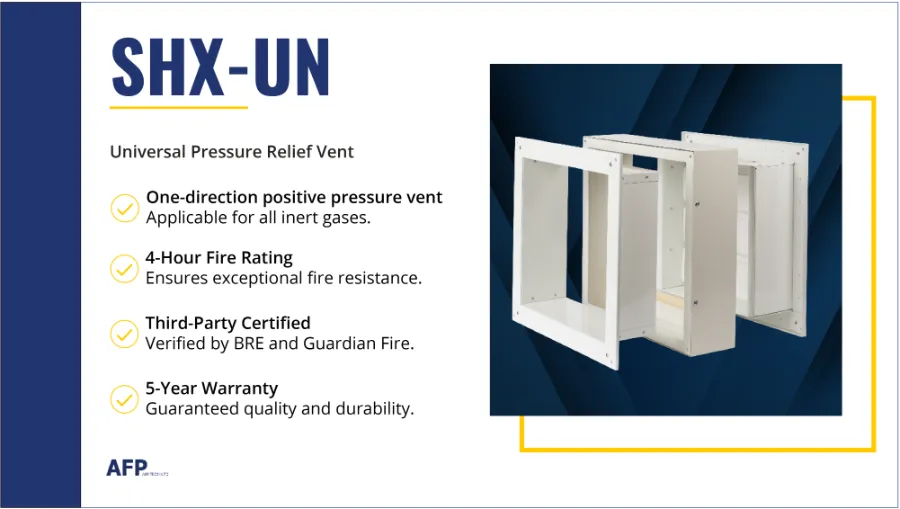
The SHX-UN is a single direction vent for positive pressure. It has the largest Free Vent Area (FVA) on the market. This pressure relief vent is applicable with gas fire suppression systems using inert gases.

The DUX is the world’s first two-way pressure relief vent specifically designed for chemical or halocarbon gaseous agents.
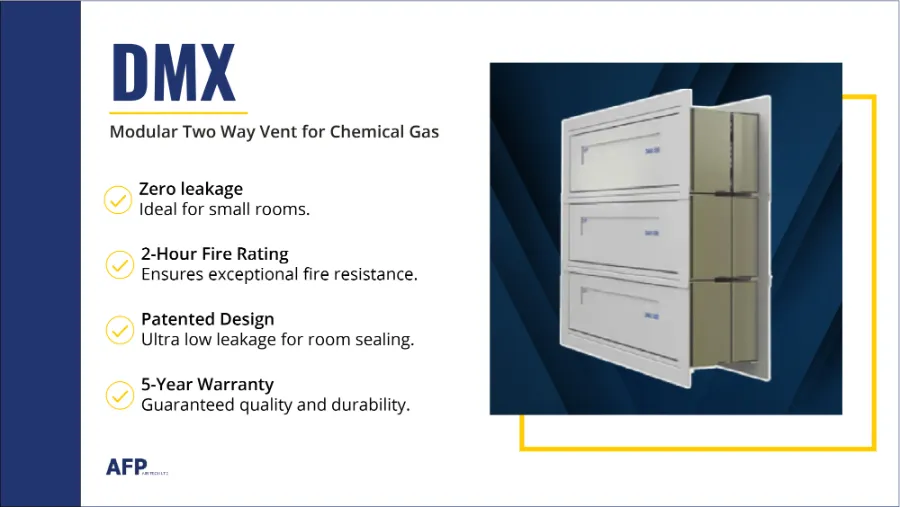
Our DMX is a two-way pressure relief vent for both positive and negative pressure venting. It has a 2-hour fire rating and an ultra-high seal. This vent is applicable with gas fire suppression systems using chemical gases, specifically Novec.
AFP’s expertise in pressure relief vent solutions
Gas fire suppression systems are a vital safeguard for server rooms and data centres, offering fast, clean fire protection that minimises downtime and equipment damage. But for these systems to work effectively—and safely—every component must perform as intended. Pressure relief is a critical part of that equation.
At AFP, we specialise in high-quality pressure relief vents designed specifically for use with gas-based fire suppression systems. Our vents are engineered to maintain room integrity, control pressure during discharge, and support the reliable operation of the overall fire protection system.
In addition to our proven product range, we offer technical support and guidance to help ensure every solution is correctly sized, installed, and integrated with your chosen suppression system. Whether you’re fitting out a new data centre or upgrading an existing setup, our team is here to help you find the right vent for your needs.
Get in touch with AFP today to discuss your project and learn how our pressure relief solutions can support your fire safety strategy.