4 different types of fire suppression systems explained
26th August 2024
How does pressure relief venting work in a gas fire suppression system?
26th October 2024

What is a gas fire suppression system and how does it work?
Gas fire suppression systems are crucial in environments where traditional fire suppression methods, such as water-based systems, could cause severe damage to equipment or infrastructure.
Gas suppression systems use specialized gasses to extinguish fires, making them ideal for protecting sensitive areas like data centers, server rooms, and electrical enclosures.
In this article, we explore what a gas fire suppression system is, how it works, and its numerous benefits.
What is gas suppression?
Gas suppression refers to the use of gasses to suppress or extinguish fires without leaving a residue. Unlike water, which may damage sensitive equipment or electronics, a gaseous agent is designed to safely eliminate fires without causing further harm.
A gas fire suppression system is a fire suppression system that uses a gaseous agent to suppress the fire.
How does it work?
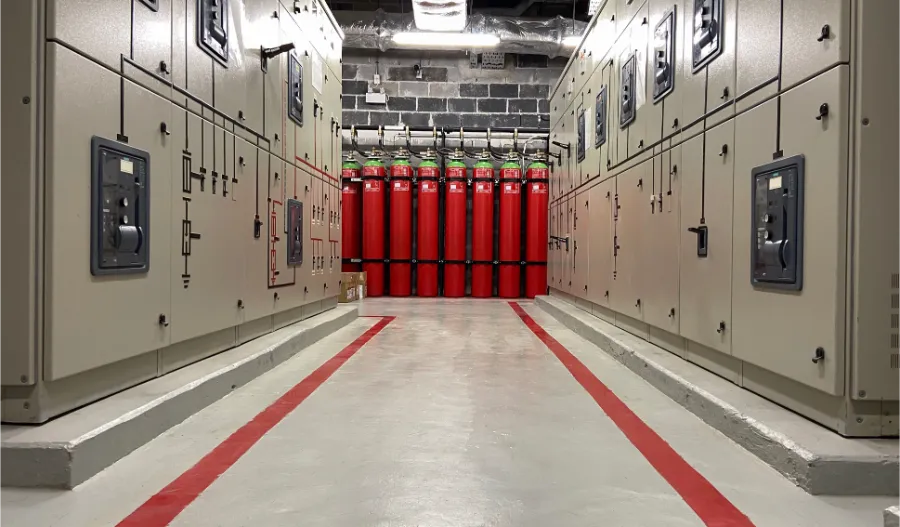
A gas fire suppression system operates by flooding the protected area with a fire suppressing gas.
Here’s a simple breakdown of how a gas fire suppression system works:
- Detection. When a fire is detected by the system’s sensors (such as smoke or heat detectors), it triggers the gas fire suppression system.
- Alarm. An audible and visual alarm is activated to alert people in the area and give them time to evacuate before the gas is discharged.
- Gas discharge. The system releases the suppression gas from the cylinders into the protected area. Depending on the type of gas, it works either by:
- Cooling: Some gasses cool the fire, reducing the temperature to below the combustion point.
- Oxygen reduction: Other gasses work by reducing the oxygen concentration in the room. Fires need oxygen to continue burning, and by reducing its presence, the fire is suppressed.
- Pressure venting. Once the gas is discharged, pressure relief vents manage the pressure inside the room to prevent damage to the structure.
- Extinguishing. The fire is extinguished as the gas prevents combustion from continuing.
See below video for a visualization of how a gas fire suppression system works.
Benefits of a gas fire suppression system
Gas fire suppression systems offer a range of benefits, making them an ideal choice for certain environments.
- No residue. Unlike water or foam-based systems, gas does not leave any residue, ensuring that sensitive equipment remains undamaged.
- Minimal disruption. Since gas does not cause secondary damage, recovery time after a fire event is reduced.
- Quick response time. These systems are designed to act quickly, minimizing potential damage and downtime.
- Effective in enclosed spaces. Gas systems are highly effective in enclosed or sealed environments.
Considerations of gaseous fire suppression systems
While gas fire suppression systems are highly effective, they come with a few considerations:
- High cost. Initial installation can be more expensive than traditional systems. However, these initial costs are often offset by the reduced damage and downtime in the event of a fire.
- Room integrity. The protected area must be well-sealed to ensure the gas stays concentrated long enough to extinguish the fire.
Room Integrity Testing (RIT)
Room Integrity Testing (RIT) is an essential part of any gas fire suppression system. It involves testing the enclosed area to ensure that it is adequately sealed to contain the gas for a sufficient amount of time.
RIT helps verify that the system will work effectively so that a fire is fully suppressed, because the gas does not escape prematurely.
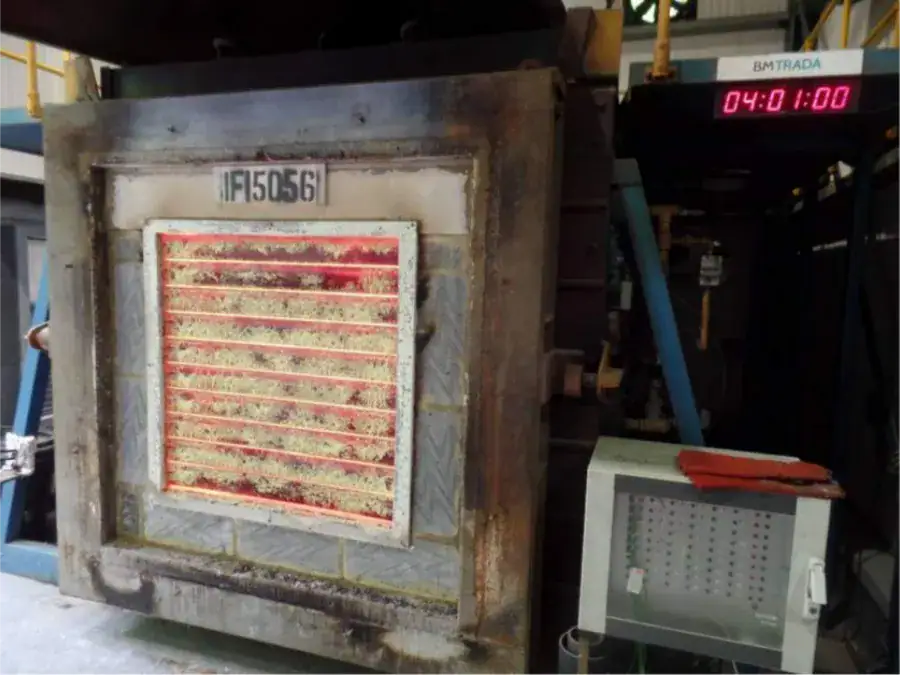
AFP’s SHX-UN Universal Pressure Vents and DUX Duflow Two-Way Pressure Vents are designed to maintain room integrity. Gas concentration is maintained by efficiently venting overpressure during gas suppression discharges, preventing room damage. Additionally, they are 4-hour fire-rated, meeting the requirements to preserve fire barrier or wall integrity for the regulated duration.
The importance of pressure relief venting
Pressure relief venting is a crucial component of gas fire suppression systems. When gas is rapidly discharged into a sealed room, it can cause a significant increase in pressure.
Without proper venting, this sudden pressure rise could damage the structural integrity of the enclosure, potentially leading to leaks or failure of the suppression system.
AFP’s pressure relief venting solutions are specifically designed to manage this pressure, allowing gas suppression systems to function safely and effectively without causing harm to the protected area or entire buildings.

Different types of fire suppression gases
There are several different gases used in gaseous fire suppression systems, each with its own characteristics and benefits.
Below, we explain the different agent fire suppression systems and which gases are used for each system.
Inert Gas Systems
Inert gases are chemically stable and non-reactive, making them ideal for fire suppression. They work by displacing oxygen in the room, reducing the concentration to a level where combustion can no longer occur. Inert gas systems are particularly effective in environments where clean and residue-free fire suppression is critical.
Examples of inert gases are:
- Argon
- Nitrogen
- Argonite
- Inergen
How it works
These gases displace oxygen to extinguish the fire. They displace a large volume of air and cause significant pressure build-up, making pressure venting necessary to prevent structural damage.
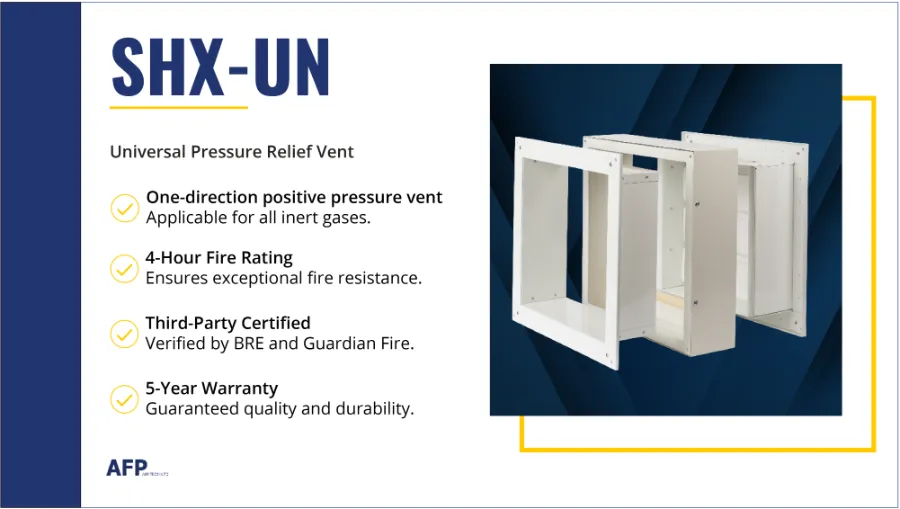
Our SHX-UN is a universal pressure relief vent with a unique design (pat applied). It offers users the industry’s best solution for blast protection and gas suppression pressure relief for all inert gases.
Chemical Clean Agent Systems
Chemical clean agents are synthetic fire suppression chemicals that are electrically non-conductive. They leave no residue, making them ideal for protecting sensitive equipment.
Most chemical clean agents fall under the category of halocarbon agents, which contain carbon and halogens like fluorine, chlorine, bromine, or iodine.
Chemical clean agent systems extinguish fires by interfering with the chemical reactions that sustain combustion, without damaging the protected area.
Examples of chemical clean agents are:
- Novec 1230
- FM-200
- FE-13
How it works
These chemical agents suppress fires by disrupting the combustion process. The gas is released quickly, spiking room pressure in only a few seconds. This for quick-responsive pressure venting solutions are needed to prevent structural damage.
Our DUX is the world’s first two-way, double action pressure relief vent for halocarbon gases (pat applied) and provides a level of performance not otherwise available for this application.

CO₂ – Carbon Dioxide Systems
Carbon dioxide (CO₂) is a widely used fire suppression gas known for its ability to displace oxygen. It’s effective in both surface and deep-seated fires, making it suitable for use in industrial and electrical environments. CO₂ is non-conductive, making it safe for use in areas with electrical equipment.
How it works
CO₂ displaces oxygen to suppress fires. In small or sealed spaces, CO₂ can cause a rapid increase in pressure, requiring venting to manage the overpressure.
Hybrid Systems (Inert Gas + Water Mist)
Hybrid fire suppression systems combine the benefits of inert gas and taking the heat away with water mist systems. These systems offer enhanced fire suppression by using both gas and water to suppress fires quickly and efficiently, while minimizing damage to sensitive equipment.
How it works
These systems combine inert gas with water mist. The gas component can still cause a pressure increase, requiring venting to avoid damage to the protected area.
Halon systems
Halon refers to a specific group of chemical compounds that were historically used in fire suppression systems. They contain bromine, fluorine, and carbon, and are highly effective at extinguishing fires by disrupting the chemical reactions that sustain combustion.
However, due to their high ozone depletion potential, halons have been largely phased out under international environmental agreements like the Montreal Protocol. Common halons include Halon 1211 and Halon 1301.
Clean agent suppression systems are the replacement for Halon systems.
Best use cases for a gas fire suppression system
Gas fire suppression systems are best suited for environments where water or foam would cause damage to sensitive equipment or assets. These include:
- Data centres
- Server rooms
- Electrical rooms
- Telecommunications facilities
- Archives and museums
- Medical facilities with sensitive equipment
Gas suppression system regulations
Regulations surrounding gas fire suppression systems are essential to ensure that these systems are designed, installed, and maintained to the highest safety standards. Because gas fire suppression involves specialized equipment and potentially hazardous environments, different countries have established their own specific regulations to protect people, property, and the environment.
Even though regulations vary significantly, common themes include requirements for system design, testing, and maintenance, as well as specific guidelines for the types of gases that can be used and how pressure relief venting should be implemented.
Below, we focus on the gas suppression system regulations in Great Britain and the United States.
Great Britain
In Great Britain, gas fire suppression systems must comply with the British Standards (BS), specifically BS EN 15004, which provides a comprehensive framework for gas-based fire suppression systems.
This standard aligns with the European Standard EN 15004, covering the design, installation, and maintenance of gaseous fire suppression systems, ensuring they meet rigorous safety and performance criteria.
United States
In the United States, gas fire suppression systems are regulated primarily by the National Fire Protection Association (NFPA), specifically under NFPA 2001, which outlines the standards for design, installation, certification and room integrity for gas fire suppression systems.
Safety first with AFP pressure relief venting solutions
At AFP, we specialize in pressure relief venting solutions that are critical to the safe operation of gas fire suppression systems. Our patented designs ensure that your system can release excess pressure during discharge, preventing damage to your enclosure while maintaining the integrity of your fire suppression system.
With AFP, you can trust that your gas suppression system will operate efficiently and safely, ensuring maximum protection for your valuable assets. Get in touch for more information or a quote.