Why standard pressure relief vents are your best choice
26th March 2026
Vent placement near obstacles: How beams, ductwork & furniture disrupt pressure relief patterns
26th May 2026

What happens after a gas suppression system discharge?
Gas fire suppression systems are designed to extinguish a fire quickly by releasing an extinguishing agent into a protected space. Depending on the type of system, this works in different ways: inert gas systems reduce oxygen levels to a point where combustion can no longer be sustained, while chemical agents interrupt the chemical reaction of the fire itself at a molecular level, stopping the flames without significantly lowering oxygen levels.
In both cases, the fire is brought under control rapidly, but the environment inside the room does not immediately return to normal once the fire is extinguished. Residual gas remains present, and in some cases there may also be byproducts from the fire itself. This means that even though the fire is out, the room is not instantly ready for re-entry or continued operation.
Because of this, it’s important to look beyond the discharge event itself. Fire suppression is not only about stopping a fire. It’s also about how quickly and safely the protected space can be brought back to a condition where people can safely enter and work again. In this article, we explain how gas extraction helps restore safe air conditions and return your enclosure to operation after a gas suppression discharge.
Phase 1: The discharge event
When a fire is detected, the gas suppression system activates and releases a gaseous extinguishing agent into the protected space. The goal is simple: bring the fire under control as quickly as possible and prevent further damage.
Depending on the type of system, this works with inert or chemical gas. Inert gas systems reduce oxygen levels in the room to a point where combustion can no longer be sustained. Chemical agents, on the other hand, interrupt the chemical reaction of the fire at a molecular level, effectively stopping combustion without significantly reducing oxygen levels.
Inert gas systems are generally designed so that oxygen levels remain above the threshold considered immediately dangerous to health under normal design conditions. However, they do temporarily lower oxygen concentration in the space, which means the environment is not suitable for continued occupancy until conditions are restored. In confined or poorly ventilated areas, this also reinforces the need for controlled post-discharge recovery before re-entry.
Chemical agents do not significantly reduce oxygen levels, but they do fully saturate the space during discharge. While they are designed for use in occupied environments, the resulting atmosphere is still altered. Depending on the fire event, there may also be combustion byproducts present, which can affect air quality and comfort even after the flames are extinguished.

The immediate aftermath inside the room
Once the fire is suppressed, the room is technically protected. However, it is not right away ready for use again:
- The extinguishing agent remains present in the space, meaning the internal environment is still saturated immediately after discharge.
- In inert gas systems, oxygen levels may still be below normal operating conditions and need time to recover.
- In both systems, visibility and general environmental comfort can be affected.
- In the case of chemical agents, air quality may not yet be suitable for immediate re-entry due to residual agent or fire-related byproducts.
This is where a critical misconception often occurs: the assumption that because the fire is out, the space is immediately safe to enter. While clean agent systems are designed with safety in mind, real-world conditions after a discharge event are more complex. Residual gases, altered air composition, and post-fire conditions all need to be considered before personnel re-enter or the space is brought back into operation.
Phase 2: Restoring safe air conditions
Once a gas fire suppression system has discharged and the fire has been extinguished, the focus shifts from suppression to recovery. At this stage, the room is still filled with residual extinguishing agent, and in some cases fire-related byproducts may also be present. Although the immediate danger has passed, the environment is not yet suitable for normal use or unrestricted re-entry.
Restoring safe air conditions means actively bringing the space back to a stable and usable state. One of the most effective ways to do this is through controlled gas extraction. By removing the remaining extinguishing agent from the room, the internal atmosphere can return to normal conditions more quickly and predictably.
This process offers two key advantages. First, it helps remove residual gas that would otherwise remain trapped in the space after discharge. Second, it supports the clearance of any airborne byproducts that may have been created during the fire event, improving overall air quality and reducing the time before the room can be safely accessed again.
Rather than relying on natural ventilation alone, which can be slow and inconsistent depending on room design and conditions, mechanical extraction provides a controlled and engineered approach to recovery. This ensures that the post-discharge phase is managed just as deliberately as the suppression phase itself.
How to extract gas after discharge?
To manage this recovery phase effectively, dedicated extraction systems such as the PXF and PXW are used. These units are specifically designed to work as part of a gas suppression environment, helping to clear the protected space after discharge.
The PXF is a floor-mounted extraction unit designed to remove heavier-than-air gases that settle at low level after discharge. Because both inert gases and chemical agents can accumulate within the room volume, the PXF provides targeted extraction to help restore safe air conditions efficiently. It is typically installed at floor level or within a floor void, allowing it to capture and remove residual gas directly from where it naturally collects.
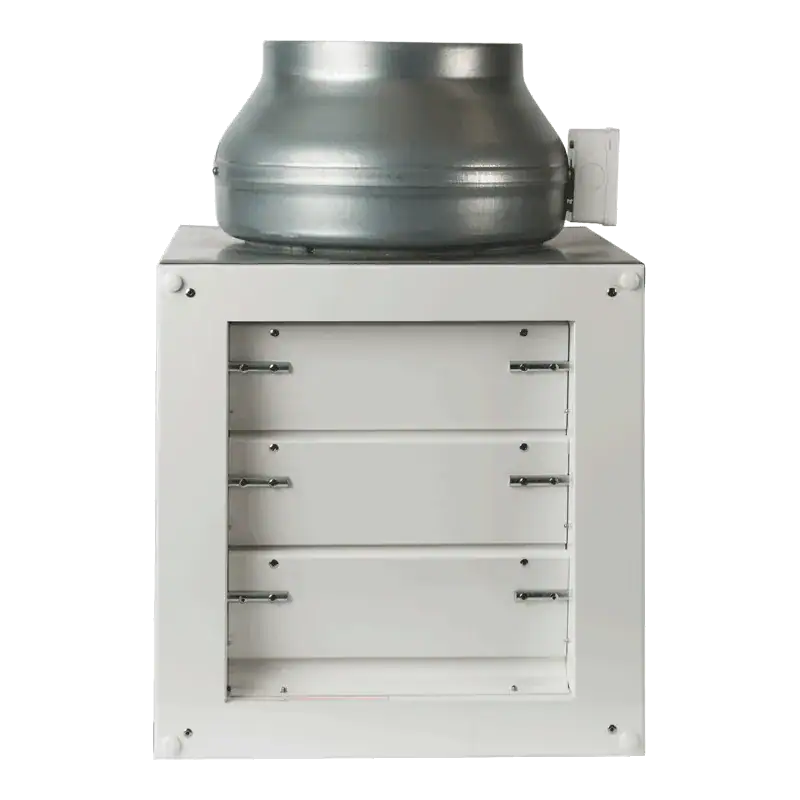
The PXW is a wall-mounted extraction system that offers a more flexible approach, particularly in applications where higher airflow rates or different installation constraints are required. It can be positioned at low or high level depending on the type of gas or byproducts that need to be removed. Working alongside pressure relief components, the PXW helps ensure that both pressure stabilisation and post-discharge extraction are managed in a coordinated way.
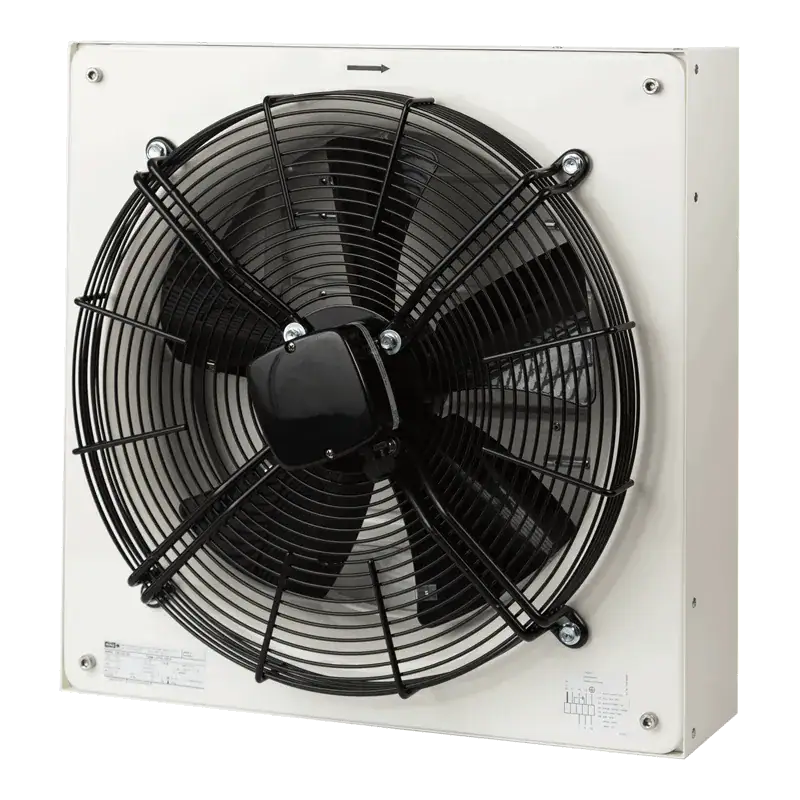
Used together, these systems provide a controlled transition from suppression to recovery, helping ensure that once a fire is out, the protected space can be made safe, usable, and operational again in a predictable and efficient way.
From discharge to recovery
Gas fire suppression is often considered a single event: the system activates, the fire is extinguished, and protection is achieved. But in practice, that moment is only the beginning of a wider process. Once discharge has taken place, the protected space still needs to be brought back to safe, usable conditions.
Even after the fire is out, residual extinguishing agent remains in the room, and in some cases fire-related byproducts may also be present. Without a controlled recovery strategy, the environment can remain unsuitable for re-entry or continued operation longer than necessary.
This is where AFP’s approach extends beyond traditional pressure relief. While pressure relief vents such as SHX and DUX are designed to manage the critical overpressure phase during discharge and protect the integrity of the room, the recovery phase requires a different solution.
AFP’s gas extraction systems, including the PXF and PXW, are designed specifically to address what happens after suppression. By actively removing residual gas and supporting the clearance of the protected space, they help restore safe air conditions in a controlled and predictable way. This reduces downtime and ensures the space can return to service more efficiently.
By combining pressure relief and post-discharge extraction, AFP offers a more complete system approach. Covering not only the moment of fire suppression, but also the essential recovery that follows.
A complete fire suppression strategy doesn’t end at discharge—it ends when the space is safe again.
Get in touch
To see how AFP pressure relief and gas extraction systems work together in real applications, explore the PXF and PXW solutions or get in touch with the team to discuss system design and integration for your project.