
AFP’s Blast Simulator: Ensuring Reliable Pressure Relief Vent Performance
26th March 2025
What is the best fire suppression system for server rooms and data centres?
26th May 2025

The Importance of Weather Testing for Pressure Relief Vents
At AFP, we specialise in pressure relief venting solutions, designed to protect people, equipment, and infrastructure during high-risk events like gas suppression discharges and arc faults. Our vents are trusted in critical environments—where performance under pressure must be guaranteed.
But pressure events aren’t the only challenge. Environmental conditions such as wind, rain, dust, and frost can all impact the performance and reliability of pressure vents over time.
When vents are exposed to the elements, their ability to function correctly can be compromised. Water ingress may damage sensitive equipment or interfere with the vent’s operation. Dust and debris can obstruct opening mechanisms. Frost may affect seals. Even strong winds can distort components, altering how the vent responds in an emergency.
That’s why we go beyond standard certification and invest in comprehensive weather testing. To simulate real-world conditions and validate the durability of our products, we developed the AFP weather simulator—a purpose-built rig that exposes our vents to the harshest environmental stressors.
In this article, we’ll take you inside our testing process, explain why weather testing matters, and show how we ensure every AFP vent performs exactly as needed—no matter the conditions.
Why weather testing matters
Pressure relief vents and weather louvres are critical safety components—often installed in environments where failure simply isn’t an option. They are expected to perform under pressure, but also under a wide variety of environmental conditions: wind, rain, dust, frost, and temperature fluctuations. That’s why rigorous weather testing is essential.
To ensure resilience against the elements, AFP tests its products to internationally recognised standards such as IEC 60529:2013, which defines the Ingress Protection (IP) rating system. This rating measures how well a product is protected against the intrusion of solid particles and water.
- 6 indicates complete protection against dust ingress—even under pressure.
- 3 confirms the unit can withstand water sprayed at it from various angles, with no leakage inside.
Another example is our DWP. This dynamic weather louvre was tested and passed IP54, meaning:
- 5 indicates limited protection against dust ingress. Enough to prevent dust from interfering with the normal operation of the unit, though not fully dust-tight.
- 4 confirms the unit can withstand water splashes from any direction, with no harmful effects.
These IP ratings show that AFP’s vents not only perform in controlled environments, but are also robust enough to handle the unpredictable and often harsh realities of real-world installations.
Without this level of protection, the systems designed to manage emergencies, like gas fire suppression or arc fault containment, could be undermined by the environment they’re installed in. That’s why at AFP, weather testing isn’t just a checkbox—it’s a cornerstone of our product development and assurance.
AFP’s weather simulator
At AFP, we understand that real-world conditions rarely reflect the clean, controlled environments imagined in theoretical design. That’s why we developed our own weather simulator—a custom-built testing environment designed to replicate the harsh, unpredictable elements our pressure vents and blast panels face in the field.
Unlike standardised tests, which focus on specific metrics like water ingress or dust protection, AFP’s simulator is built to challenge our products far beyond what most regulations demand. We replicate high wind pressure, heavy rainfall, frost conditions, airborne dust, and extreme temperature shifts—conditions that can compromise performance if a vent is not rigorously engineered and tested.
While IP ratings, like IP63, confirm a product’s resistance to dust and water under controlled test conditions, they do not fully simulate how products perform over time, or under multiple environmental stressors occurring at once. That’s where AFP’s weather simulator goes further. We ensure that our products are not only compliant but also resilient—able to perform reliably under extreme and combined conditions, even when industry standards don’t require such testing.

Test setup
The heart of AFP’s weather simulation capability lies in our purpose-built test rig, designed to create repeatable, real-world conditions in a controlled setting.
A powerful wind machine capable of generating wind speeds of up to 16 m/s (equivalent to Force 7 on the Beaufort scale) is paired with precision rain nozzles that simulate horizontal driving rain. This allows us to test how vents respond to simultaneous wind and water stress.


Dust and fine particulate matter are also introduced to assess product performance against airborne solids. In some cases, grease is applied at the seal points to detect whether dust intrusion could bypass gasket protection. This method validated the IP6X test of our IBP 300 pressure vent. To test frost resistance and sealing durability, temperature control and moisture exposure are combined to simulate freeze-thaw cycles.
Our testing approach mimics the kinds of challenges products encounter on rooftops, in remote electrical substations, or inside high-risk industrial enclosures. This is important to us, because we know that reliability means planning for the worst, not just the expected.
Our tested vents
All our current external-facing vent products are undergoing this rigorous testing process using the AFP weather simulator:
DWP
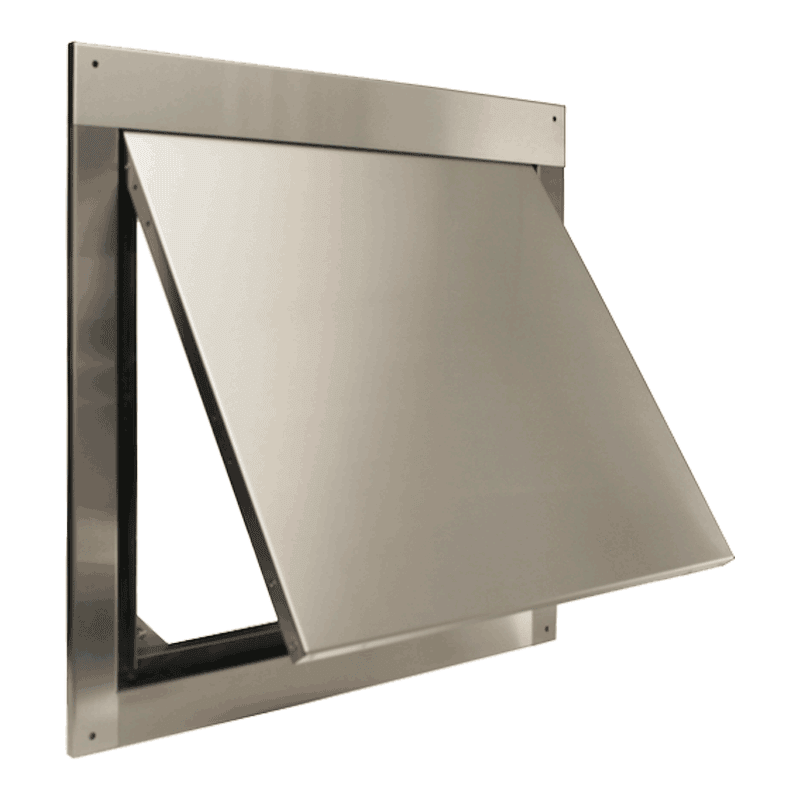
- Stainless steel dynamic weather panel
- Fits directly onto the wall liner of the SHX-UN
- IP54 rating
- 100% seal against wind and rain particles and smoke
- Adjustable opening size
- 10 year guarantee
- Available off the shelf on next day delivery
HE-BP

- Stainless steel high energy blast panel
- Installed flush mounted
- IP54 rating
- Sealed against wind and rain particles and smoke
- Adjustable opening pressure
- 10 year casing corrosion guarantee
- Available off the shelf on next day delivery
BSV
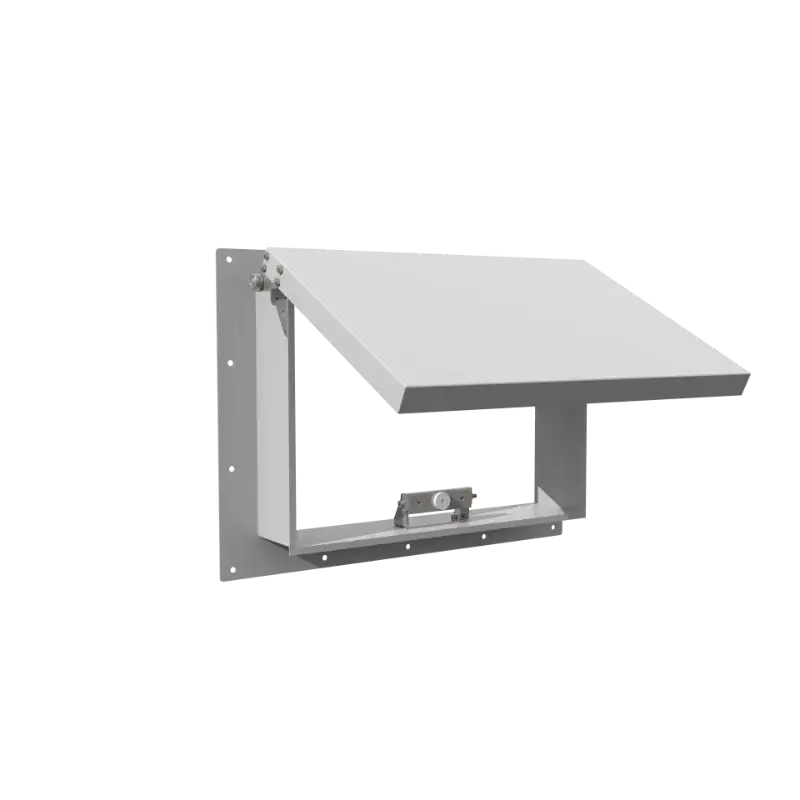
- 304 or 316L Bespoke Blast Vent, available with thermal insulation or fire-rated thermal insulation
- Full weather, dust, and gas protection when closed
- Heavy-duty 2 mm stainless steel frame with multiple fixing points
- 12 mm hinge shafts and PTFE-bonded magnetic latch for adjustable opening pressure
- Opens instantly to relieve exhaust pressure; self-closing by gravity
- Overpressure suppression time: < 0.06 s
- Operating range: –80 °C to +80 °C
- 3 versions: arc flash, insulated & fire rated insulation
- Lifetime corrosion guarantee
- Made to order
ArcX DB
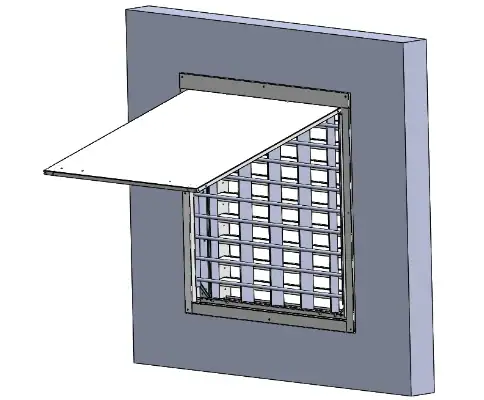
- Stainless steel external blast door
- Blast resistant up to 100 kPa
- Can relieve internal pressures in single direction down to 250pa
- Smoke, dust, and weather seal
- 5 year guarantee
- Made to order
These products are used in critical applications where failure is not an option—from gas fire suppression rooms to high-voltage electrical installations. By pushing our vents to their environmental limits, we ensure they continue to open, seal, and reset properly under the toughest conditions—without compromise.
This commitment to extreme testing gives our clients peace of mind. Whether protecting sensitive electrical equipment from arc flash events or maintaining integrity during a gas discharge, AFP vents are proven to stand up to the challenges of their environments.
Info: As part of our ongoing quality assurance, all external-facing products are now undergoing IP testing, and official IP ratings will be published on each product page as they become available.
The benefits of choosing AFP’s tested vents
When safety is critical, performance under pressure isn’t negotiable—it’s essential. That’s why choosing AFP’s weather-tested vents means choosing reliability in the truest sense of the word.
Every product we put forward—whether it’s a blast panel or a weather louvre—has been exposed to the kind of real-world conditions it will face in the field. From high winds and heavy rain to airborne dust and freezing temperatures, our vents are built and proven to withstand the elements.
For engineers, specifiers, and building managers, this level of assurance delivers peace of mind. Our testing goes beyond industry standards, not just to prove compliance with fire safety or electrical protection regulations, but to guarantee dependable performance long after installation.
By choosing AFP, you’re not just selecting a product that ticks the boxes—you’re investing in durability, safety, and long-term confidence.
Get in touch
AFP products are tested, trusted, and built to last—because when the environment turns hostile, you need to know your critical systems will continue to function.
If you’re working on a project where environmental reliability is key, or if you have specific testing requirements, we’re here to help. Reach out to our team for more information on our weather simulator, IP testing capabilities, or to discuss how our pressure relief vents can meet the demands of your installation.
Contact our team to learn more about our tested vents, request test reports, or discuss your project’s environmental performance requirements.